The Process of Identity Formation
To speak about identity means to speak about human nature and its complexity, about the history of human becoming, of creation and re-creation through thought, effort, and will. It means to speak about a visible face, conscious of itself, and another hidden one that transpires through thoughts, gestures, and behaviors worthy of attention.
In a world marked by tensions and conflicts, dominated by rapid and multiple changes (economic, social, political, psychological), cultivating personal identity becomes urgently necessary.
From a scientific standpoint, one cannot speak of identity without addressing personality and the factors involved in the psycho-social processes that intervene in the structuring of personal identity.
We must not forget that, given the social nature of human beings, human personality can only be appreciated on a social plane, validating itself in relation to others, through continuous comparison and re-evaluation. The social realm is the mirror in which a person reflects their true face; one cannot exist outside of society, but only within it and through it. Therefore, a person can only be analyzed as a social being, since their psychological development is “always impregnated with society’s relationship to them.”
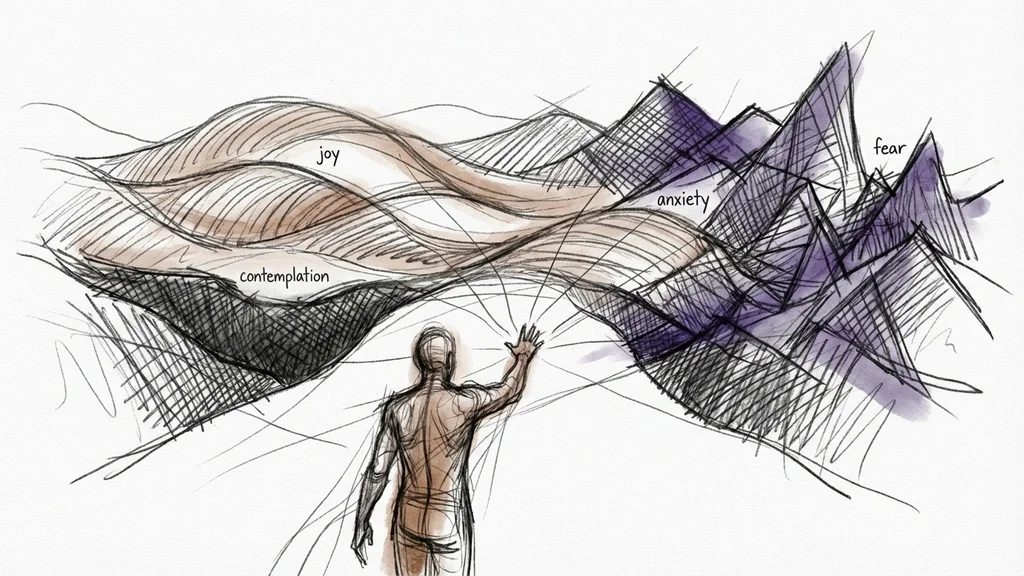
The fact that human beings can only exist within society is attested not only by psychology and sociology, but also by history, anthropology, the whole of human culture, and especially by the psychological evolution of human beings, grounded in the deepening and internalization of the social realm, which became the launching point of human consciousness. Human reality is deeply complex. It is not only positive or only negative, but a contradictory reality, full of inner conflicts and clashes, of positive and negative character traits, of high social aims and petty, selfish ones. Through the interaction of these, a person constructs themselves, through “the collision of opposites, the counteraction of opposing tendencies, the progressive overcoming of negative tendencies or traits that settle temporarily or permanently in their personality.”[1]
[1] M. Zlate, “Man Face to Face with the World”
Human personality is, at its core, at all times involved in a vast network of social relations. A person is never alone; they are with themselves. Relations with others, the reference to others and to objectivity, are permanent. In this way, the “social self” reflects the interpenetration of the self and society, creating the intimate and complex dialectic of identifying the “concrete person” with their ideals, aspirations, and values, which are expressed and exist within society and its offerings.
It is considered that the problem of the continuous effort to identify with certain values of life (material, spiritual, cultural, and socio-ideological) and the search for one’s own identity is one of the fundamental problems of modern psychology.
Given that human existence is indisputably tied to social life, the most concrete expression of human personality is its mode of manifesting and relating to fellow human beings, for as Mihai Golu tells us: “Personality exists, forms, and manifests itself through relating.”[2]
Identity has been, directly or indirectly, the object of research for many psychologists concerned with the evolution of human personality, with the causal understanding of its manifestations, and with the improvement of its behavior meant to place the individual on a new stage of evolution. Among these concerns stands out the psychological orientation called “Humanistic Psychology,” at the center of which lies the human being and their existential aspects, with an emphasis on the potential for becoming, on the exploration and development of human qualities. The notable representatives of humanistic psychology, A. Maslow and Carl Rogers, reveal the unique character of the human being, capable of lucidly directing their own trajectory through life, and above all, “becoming what they are capable of being.”[3]
Concerned with the progress of the human being and their continuous capacity for improvement, Romanian psychologists have also contributed to the elaboration of a human model. All works that have addressed the problem of knowing the human being touch, more or less, the problem of identity, of self-awareness necessary to identify one’s place in the world, to find optimal solutions to the inherent problems of life, and to approach the essence of phenomena. By distancing themselves from the essence of phenomena, a person sinks deeper into their anxieties, entering a vicious circle, often irrational, distancing themselves from the condition of being master of their own life. Given the social nature of the individual, their identity can only be appreciated on a social plane, validating itself in relation to others, its path starting from the biological sphere, passing through the psychological, affective, and intellectual, and arriving in the social.
The sense of identity creates safety, psychological comfort, and intimacy, but also responsibilities tied to the temporary tasks related to the broader social evolution of the structures of belonging and the material and spiritual security of identity.
We are not; we become. The whole point is to catch ourselves, to find ourselves in what is essential in our being, in what constitutes the dominant trajectory in the transformation of our personality, as V. Pavelcu said.
Among the stages of life that characterize human evolution, I have focused on adolescence, because the main concern of adolescents is self-identification, the development of personal consciousness. It represents the great step of social adaptation, when inner needs and external pressures lead the young person to adopt a life strategy, to reflect more deeply upon themselves and the world around them.
In the search for identity and for their place in the world, as well as in the group they belong to, the adolescent goes through a stage of life strongly imbued with affect and intellect. Adolescence is a period lived intensely, turbulently, a continuous search for the self among the ensemble of social selves.
The search for identity in adolescence has an important connection to the spirit of rebellion. Adolescents consider that their opinions should take priority; they want, at all costs, to make an impression, to attract attention, to be taken seriously and considered an adult. They realize they are no longer children because their attitude toward life has changed: “I have reached an age where the child has disappeared. My way of thinking, my actions are more mature, and my way of looking at life is different than in childhood.” No adolescent wants to be treated as a child, and in the face of adults, they display an attitude of rebellion.
Breaking free from childhood conformity is equivalent to gaining independence.
The conflict between generations is and will be eternal. Parents, as adults, will always have stabilized, tested principles and a dose of skepticism, while young people will have ideals, will strive for perfection, and will be more trusting.[4]
[2] M. Golu, “The Dynamics of Personality”
[3] Maslow in M. Zlate, “Man Face to Face with the World”
[4] Modrea, M., “Parents of Adolescents” - Journal of Psychology No. 2, Scientific and Technical Publishing, Bucharest, 1996